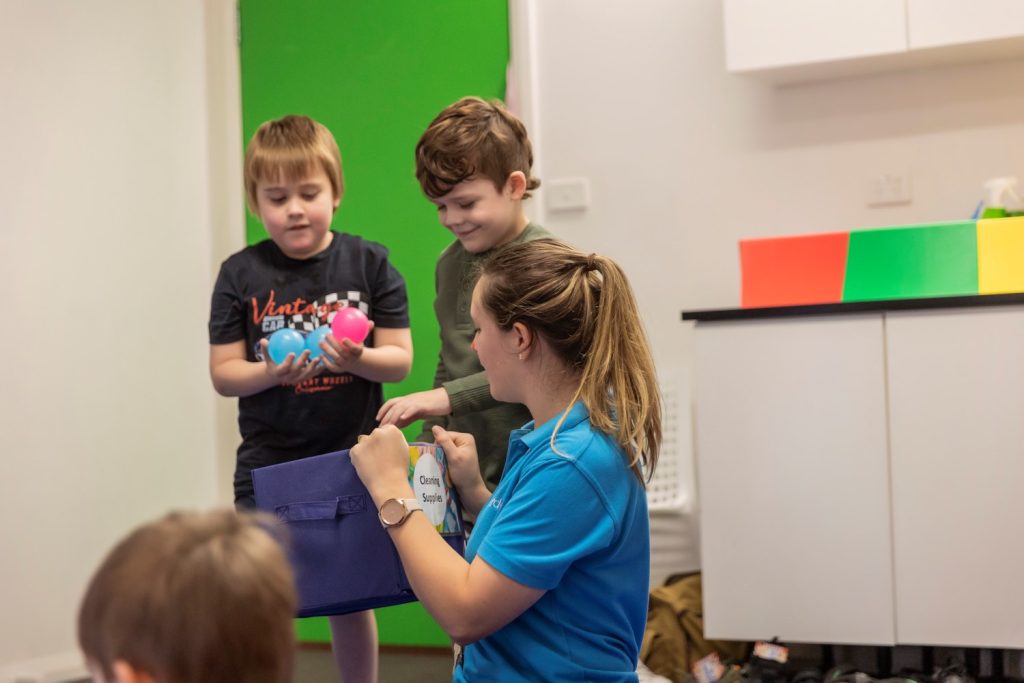
Making friends, joining in games, taking turns and navigating social situations are all important parts of childhood. While some children seem to develop these skills naturally, others may need a little extra support to feel comfortable and confident when interacting with others.
Social skills help children participate in everyday activities, build relationships and develop a sense of belonging at home, at school and in their community. For children who find social situations challenging, Paediatric Occupational Therapy can help develop the skills and confidence needed to participate in meaningful social experiences.
At Happy Dots Therapy Services for Children, we understand that every child is unique. Our sensory-based and play-based approach focuses on each child’s individual strengths, needs and goals, helping them develop practical skills in a supportive and engaging environment.
In this blog, we’ll explore how occupational therapy can support social skills development in children and share practical strategies that families can use in everyday life.
What Are Social Skills, and Why Are They Important?
Social skills are the skills children use to interact, communicate and build relationships with others. They develop over time through everyday experiences, play, observation and opportunities to connect with people around them.
These skills may include:
- Communication: Expressing needs, sharing ideas and communicating with others using speech, gestures or other communication methods.
- Turn-taking and sharing: Participating in games and activities with other children while learning to navigate shared experiences.
- Understanding emotions: Recognising and expressing feelings, as well as learning ways to manage emotions during social situations.
- Cooperation and teamwork: Working alongside others, negotiating roles and participating in shared activities.
- Problem-solving: Navigating disagreements, unexpected changes and challenges that arise during play.
- Social awareness: Learning about different perspectives, personal boundaries and the expectations of particular social situations.
- Building relationships: Developing connections with peers, family members, educators and other important people.
Children develop these skills at different rates. Some may find group activities overwhelming, struggle with transitions during play, find it difficult to communicate their needs or feel unsure about how to join in with other children.
These challenges don’t mean a child doesn’t want friendships or social connections. They may simply need support, understanding and opportunities to practise skills in ways that work for them.
How Can Occupational Therapy Support Social Skills Development?
Paediatric occupational therapy focuses on helping children participate in the everyday activities that are important to them. This includes playing, learning, developing independence and connecting with others.
Social participation can be influenced by many factors, including sensory processing, emotional regulation, communication, motor skills and the demands of the environment.
An occupational therapist considers how these factors may affect a child’s ability to participate in social situations and works with the child and family to identify meaningful goals.
At Happy Dots, therapy is tailored to each child’s individual needs, interests and strengths. Depending on the child’s goals, occupational therapy may incorporate the following strategies.
1. Understanding Your Child’s Strengths and Needs
Every child has their own way of experiencing and navigating the world. Before developing strategies, an occupational therapist works to understand what is going well for the child and where additional support may be helpful.
This may involve:
- Learning about the child’s interests, strengths and preferred ways of playing.
- Gathering information from parents and caregivers about everyday experiences.
- Observing how the child participates in play and social activities.
- Exploring whether sensory preferences, emotional regulation or environmental demands affect participation.
- Working collaboratively with families and, where appropriate, educators and other professionals.
For example, a child who avoids noisy group activities may find the environment overwhelming rather than lack interest in other children. Understanding the reason behind the difficulty helps the therapist identify strategies that better support the child’s needs.
The goal is not to change who a child is, but to understand what helps them participate, communicate and connect in ways that feel comfortable and meaningful.
2. Using Play-Based Activities to Build Social Skills
Play provides children with opportunities to explore, experiment, communicate and learn alongside others. It can also create a natural setting for practising social skills without the pressure of a formal lesson.
Occupational therapists may use motivating, play-based activities to support children in developing skills such as:
- Taking turns during board games or construction activities.
- Working together to build a LEGO creation.
- Sharing ideas during pretend play.
- Negotiating roles in imaginative games.
- Solving problems when a game doesn’t go as expected.
- Practising how to join an activity or invite someone to play.
For example, two children might work together to build a tower. They can practise planning, communicating their ideas, sharing materials and finding solutions if the tower falls over.
The therapist can provide encouragement, demonstrate strategies and adjust the activity to suit the children’s needs.
At Happy Dots, play is more than just fun. It can be an opportunity to practise meaningful everyday skills in a supportive environment.
3. Supporting Emotional Regulation
Social situations can bring a wide range of emotions. A child might feel excited when playing with friends, disappointed when losing a game or frustrated when others don’t understand their ideas.
When emotions become overwhelming, it can be harder to participate in activities or work through social challenges.
Occupational therapy may help children explore strategies for recognising their emotions, understanding their sensory needs and finding ways to feel more regulated.
Strategies may include:
- Identifying and communicating feelings.
- Recognising early signs of frustration or overwhelm.
- Exploring sensory activities that support regulation.
- Practising calming or coping strategies that work for the individual child.
- Using visual supports to prepare for transitions or unfamiliar activities.
- Creating opportunities for movement breaks or quiet time when needed.
For example, a child who becomes overwhelmed during a busy group activity might benefit from a quieter space, a movement break or a clear explanation of what will happen next.
The aim is to help children understand their own needs and access appropriate support, rather than expecting them to manage every situation without assistance.
4. Developing Communication and Social Understanding
Children communicate in different ways. Some use spoken language, while others communicate through gestures, pictures, communication devices or a combination of methods.
Social communication involves more than words. It can include expressing preferences, asking for help, sharing interests, responding to others and communicating when something doesn’t feel right.
Depending on the child’s needs, occupational therapy may support participation in social interactions by helping children:
- Express their needs, choices and boundaries.
- Recognise different ways people communicate.
- Practise entering and leaving shared activities.
- Understand routines and expectations within particular environments.
- Use visual supports or other tools to make social situations more predictable.
- Explore ways to navigate disagreements and solve problems.
Occupational therapists may collaborate with Speech Pathologists and other professionals when communication skills are an important part of a child’s goals.
Importantly, successful social interaction does not require every child to communicate in the same way. The focus is on supporting meaningful connection, mutual understanding and participation.
5. Encouraging Peer Interaction and Group Participation
For some children, joining a group or interacting with peers can feel challenging. They may be unsure how to enter a game, keep up with the activity or manage the sensory demands of a busy environment.
Structured group activities can provide opportunities to practise social participation with support.
Depending on the child’s needs and the program available, activities may involve:
- Cooperative games and shared projects.
- Building or creating something together.
- Practising turn-taking during motivating activities.
- Exploring different ways to contribute to a group.
- Developing confidence in unfamiliar activities.
- Learning to ask for help or communicate preferences.
Group activities can also help children discover shared interests and experience the enjoyment of participating alongside others.
However, group therapy isn’t the right fit for every child at every stage. Some children benefit from individual support first, while others may prefer parallel play, smaller groups or activities with fewer sensory demands.
A child’s readiness, interests and goals should guide the approach.
6. Building Empathy, Perspective-Taking and Problem-Solving
Children gradually learn that other people may have different ideas, feelings and preferences. These skills can help them navigate disagreements and develop positive relationships.
Occupational therapy may incorporate activities that encourage children to explore different perspectives and consider possible solutions to everyday challenges.
For example, during a game, a therapist might help a child explore what they could do if two players want the same piece or if the rules need to be clarified.
Children can practise:
- Identifying a problem.
- Communicating what they need.
- Listening to another person’s perspective.
- Exploring different possible solutions.
- Asking for help when needed.
- Repairing misunderstandings with appropriate support.
These skills develop over time and through experience. Children benefit from adults who model respectful communication, acknowledge their feelings and provide guidance without expecting them to navigate every challenge independently.
7. Working Together With Families and Educators
Children are more likely to use developing skills when the people around them understand their needs and provide consistent support.
At Happy Dots, we recognise the importance of working collaboratively with families and, where appropriate, educators and other professionals involved in a child’s care.
Depending on the child’s goals, this may include:
- Sharing practical strategies that families can use at home.
- Identifying helpful adjustments for school or community activities.
- Discussing sensory or environmental factors that affect participation.
- Developing consistent approaches to transitions and challenging situations.
- Supporting opportunities to practise skills in everyday routines.
For example, if a child is working towards joining playground games, the family and school may explore ways to make the experience more predictable, identify a preferred activity or provide support when entering a group.
The aim is to help children use their developing skills in the environments where they live, learn and play.
Practical Ways to Encourage Social Skills at Home
Families don’t need special equipment or complicated activities to support social development. Everyday routines and shared interests can provide valuable opportunities to practise.
Here are some ideas to try:
- Follow your child’s interests. Join them in an activity they enjoy, whether that’s drawing, building, puzzles, pretend play or exploring nature.
- Model communication. Demonstrate how to ask for help, express preferences, negotiate choices and work through small disagreements.
- Keep activities manageable. Start with short, familiar activities and gradually introduce new experiences when your child feels ready.
- Prepare for changes. Explain what to expect before an unfamiliar activity or social event. Visual schedules or simple reminders may help some children.
- Allow different ways to participate. A child might prefer to watch before joining in, play alongside another child or take breaks from a group.
- Recognise effort, not just outcomes. Acknowledge small steps, such as communicating a preference, asking to join an activity or trying something new.
- Make room for breaks. Social interaction can be tiring. Allowing time to rest or recharge can help children participate more comfortably.
Remember that every child is different. Strategies that work well for one child may not suit another, so it is helpful to observe what supports your child’s comfort, confidence and engagement.
When Might My Child Benefit From Occupational Therapy?
You may wish to seek advice if your child regularly experiences difficulties participating in social or play activities that are important to them.
For example, you might notice that your child:
- Finds group activities or busy environments difficult to manage.
- Becomes overwhelmed during play or social interactions.
- Has difficulty participating in games with other children.
- Finds transitions between activities challenging.
- Needs additional support to recognise or manage sensory needs.
- Experiences difficulties with the everyday skills involved in joining in at home, school or in the community.
These signs don’t automatically mean your child needs occupational therapy. They can, however, be useful starting points for a conversation with a healthcare professional about your child’s strengths, needs and participation.
Depending on the concerns, a GP, paediatrician or another relevant professional may help you explore suitable support options.
Supporting Your Child’s Social Development With Happy Dots
At Happy Dots Therapy Services for Children, we believe every child deserves opportunities to develop their skills, explore their interests and participate in the activities that matter to them.
Our paediatric Occupational Therapy and Speech Pathology services use individualised, sensory-based and play-based approaches to support children’s development and everyday participation.
We work alongside families to understand each child’s unique strengths and goals and explore practical ways to support their progress.
If you have questions about your child’s development, social participation or everyday skills, our friendly team can help you explore whether our services may be appropriate.
Ready to learn more about how Happy Dots can support your child?
Contact our team to discuss your concerns or make an enquiry.
Happy Dots Therapy Services for Children
- Phone: (02) 4959 8920
- Email: admin@happydots.com.au
- Website: www.happydots.com.au
- Online intake form: Complete the Happy Dots Intake Form
Helping children build skills, confidence and independence, one step at a time.